
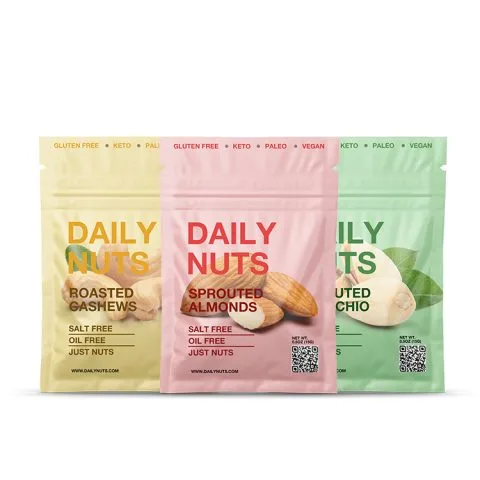
 Custom Printed 3 Side Sealed Bag for Sachets
PET/PE Plastic Pouches
PET/PE plastic pouches are the standard printed laminate: polyester on the outside for the print and the handling, polyethylene on the inside for the seal. It is the structure most retail packs are built on, running across every shape we make from 5 g sachets to 25 kg sacks, with zippers, valves, windows and matt or gloss finishes. The barrier is tuned to your stated shelf life rather than maximised, and that is what leaves headroom for recycled content or a recyclable mono-material build without losing the date.
In this range292 products
Minimum orderFrom 1,000 pieces
SamplesStock samples free
Lead time15-25 days after approval
-
Custom Printed 3 Side Sealed Bag for Sachets
-
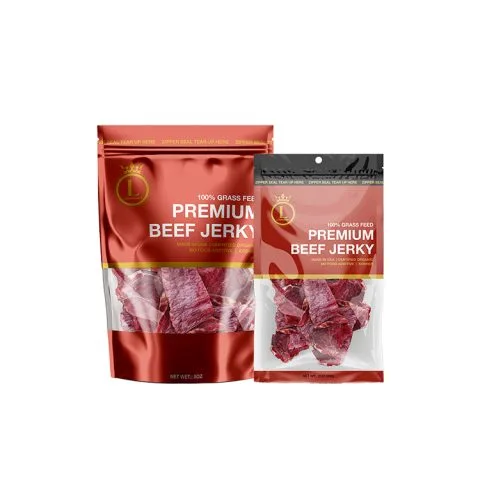 Custom Printed 3 Side Sealed Bag with Zipper
 -
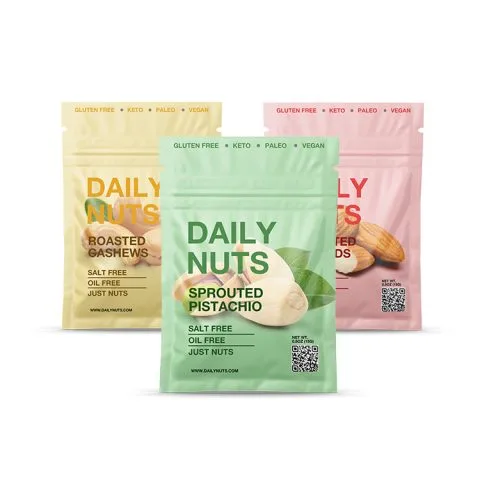 Custom Printed 3 Side Sealed Bag with Zipper – Smell-Proof (4 g)
 -
 Custom Printed Back Seal Pouch for Snacks
 -
 Custom Printed Back Seal Pouch for Snacks No. 10
 -
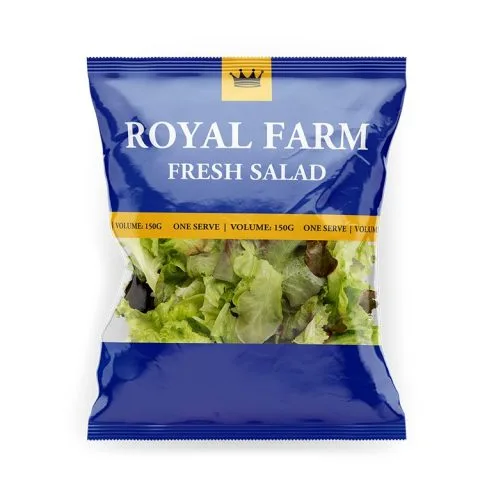 Custom Printed Back Seal Pouch for Snacks No. 11
 -
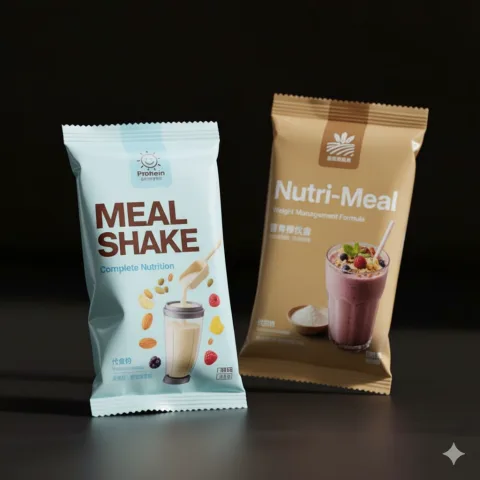 Custom Printed Back Seal Pouch for Snacks No. 12
 -
Custom Printed Back Seal Pouch for Snacks No. 2
-
 Custom Printed Back Seal Pouch for Snacks No. 3
 -
 Custom Printed Back Seal Pouch for Snacks No. 4
 -
 Custom Printed Back Seal Pouch for Snacks No. 5
 -
 Custom Printed Back Seal Pouch for Snacks No. 6
 -
 Custom Printed Back Seal Pouch for Snacks No. 7
 -
 Custom Printed Back Seal Pouch for Snacks No. 8
 -
 Custom Printed Back Seal Pouch for Snacks No. 9
 -
 Custom Printed Clothing Bag for Garments
 -
 Custom Printed Clothing Bag with Zipper
 -
 Custom Printed Clothing Bag with Zipper No. 2
 -
 Custom Printed Clothing Bag with Zipper No. 3
 -
 Custom Printed Clothing Bag with Zipper No. 4
 -
 Custom Printed Clothing Bag with Zipper No. 5
 -
 Custom Printed Coffee Bag for Whole Bean and Ground Coffee
 -
 Custom Printed Coffee Bag for Whole Bean and Ground Coffee (5 g)
 -
 Custom Printed Coffee Bag for Whole Bean and Ground Coffee No. 2
 -
 Custom Printed Coffee Bag with Valve
 -
 Custom Printed Coffee Bag with Valve (250 g)
 -
 Custom Printed Coffee Bag with Zipper
 -
 Custom Printed Coffee Bag with Zipper (1 kg)
 -
 Custom Printed Coffee Bag with Zipper (100 g)
 -
 Custom Printed Coffee Bag with Zipper (8 oz)
 -
 Custom Printed Coffee Bag with Zipper and Valve
 -
 Custom Printed Coffee Bag with Zipper and Valve (100 g)
 -
 Custom Printed Coffee Bag with Zipper and Valve (12 oz)
 -
 Custom Printed Coffee Bag with Zipper and Valve (250 g)
 -
 Custom Printed Coffee Bag with Zipper and Valve (250 g) No. 2
 -
 Custom Printed Coffee Bag with Zipper and Valve (250 g) No. 3
 -
 Custom Printed Coffee Bag with Zipper and Valve (250 g) No. 4
 -
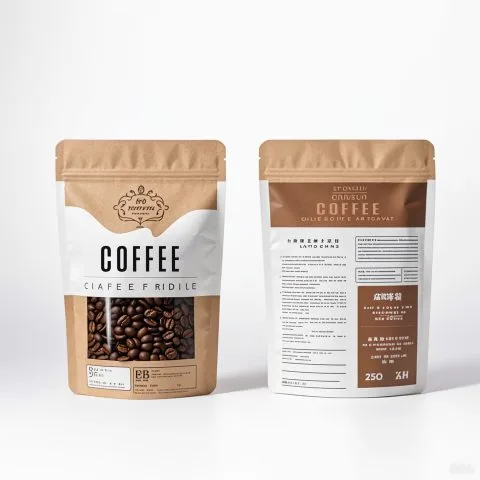 Custom Printed Coffee Bag with Zipper and Valve (250 g) No. 5
 -
 Custom Printed Coffee Bag with Zipper and Valve (500 g/12 oz)
 -
 Custom Printed Coffee Bag with Zipper and Valve and Window (2 kg)
 -
 Custom Printed Coffee Bag with Zipper and Valve No. 2
 -
 Custom Printed Coffee Bag with Zipper and Valve No. 3
 -
 Custom Printed Coffee Bag with Zipper and Valve No. 4
 -
 Custom Printed Coffee Bag with Zipper No. 2
 -
 Custom Printed Coffee Bag with Zipper No. 3
 -
 Custom Printed Drip Coffee Bag with Valve
 -
 Custom Printed Drip Coffee Bag with Zipper
 -
 Custom Printed Fertiliser Bag
About PET/PE laminate
The Laminate Most Packs Are, and Why That Is Usually Right
A PET/PE pouch is two layers doing two jobs: a polyester outer web that carries the print and takes the handling, bonded to a polyethylene inner layer that makes the seal. No aluminium, no paper. It is the structure most retail packs are built on, and for most retail products it is the correct answer rather than the cheap one.
What It Does Well
- Print. PET is the best surface we print on. Fine type, gradients and photographic images hold on it in a way they do not on kraft.
- Clarity. A clear laminate lets the product sell itself, and a window costs nothing because the whole face already is one.
- Moisture. Enough to keep dry goods dry through a normal retail life.
- Cost. The lowest per pack of any structure here, and the one against which the others are judged.
Where It Stops Being Enough
| The problem | What PET/PE does | What to specify instead |
|---|---|---|
| Oxygen over a long shelf life | Slows it, does not stop it | Foil, or metallised as a middle step |
| Light on a sensitive product | Only where the print covers it | Foil |
| A kerbside recycling claim | Mixed PET and PE is not sorted | Mono-material PE — see recycled and recyclable |
| Composting at end of life | Does not compost | PLA/PBAT, with less shelf life |
| A natural, uncoated look | Reads as film, however it is printed | Kraft paper laminate |
Clear, Metallised, Matt or Gloss
Within this one structure there is more range than most buyers expect. Clear shows the product. Metallised PET sits between clear and foil: close to foil on moisture, well short on oxygen, with a metallic face many brands want. Matt hides handling marks and photographs flatter; gloss lifts colour on a crowded shelf; spot UV over either picks out a logo. None of these change how the pack performs, only how it reads.
The structure runs in every format we make — stand up pouches, spout pouches, back seal pillow pouches, flat bottom bags, flat sachets and printed roll film for your own line — from 5 g samples to 25 kg sacks.
Narrow it down
Where PET/PE Plastic Pouches Sits in the Range
The numbers are how many packs in this range are also in that one, counted from the catalogue rather than chosen by hand.
The Shapes This Range Is Made In
Frequently asked
Specifying Pet/pe Plastic Pouches: The Questions That Decide It
What is a PET/PE laminate made of?
An outer PET web that carries the print and the strength, bonded to an inner PE layer that makes the seal. Two layers, no aluminium, and the structure most retail packs are built on.
How long a shelf life does PET/PE give?
For most dry goods, comfortably into months rather than weeks. What it will not do is carry a twelve or eighteen month claim on a fatty, aromatic or light-sensitive product — that is where foil starts.
Does a matt or gloss finish change how it performs?
No, only how it reads and how it feels. Matt hides handling marks better and photographs flatter; gloss lifts colour on a busy shelf. Both take spot UV over the top.
Can I have a clear window without extra tooling?
On a clear laminate the window costs nothing — you simply leave the ink out of that area. On a printed or metallised structure it is a shape in the artwork rather than a separate die.
When should I move up to foil?
When the shelf life is the claim, when the product is high in fat, aromatic or light sensitive, or when it ships by sea into a hot market. We will say which of those applies to your fill.
Is metallised film available in this structure?
Yes. Metallised PET sits between clear and foil: close to foil on moisture, well short of it on oxygen, at a cost between the two and with a metallic look many brands want.
Is PET/PE recyclable?
Not as a mixed PET and PE laminate. Built as mono-material PE instead it can enter a PE stream, giving up some barrier in exchange. Both are quoted the same way.
What thickness do you normally run?
Between 90 and 140 microns for most retail fills. Heavier survives the pallet and the last mile; lighter saves material. The fill weight and the freight route decide it.
Does it work for frozen or retort?
Freezer grade, yes, with a sealant chosen for cold. Retort needs a different structure altogether — a standard PET/PE will not survive it.
Can it be made with recycled content?
Yes, with post-consumer film in the outer layers and a virgin sealant against the product. See recycled-content packaging for what that changes and what it does not.