
 Custom Printed Foil 3 Side Sealed Bag for Sachets
Cosmetic and Personal Care Packaging
Cosmetic and personal care packaging: sachets and pouches for creams, masks, samples, shampoo and refills, from 1 g single doses upward. Most are flat three side seal sachets in foil and PET/PE. Personal care fills are oily or alcohol-based far more often than food, and either will attack the wrong sealant, so the inner layer is chosen against the formulation and trialled with your actual product rather than a stand-in.
In this range13 products
Minimum orderFrom 1,000 pieces
SamplesStock samples free
Lead time15-25 days after approval
-
Custom Printed Foil 3 Side Sealed Bag for Sachets
-
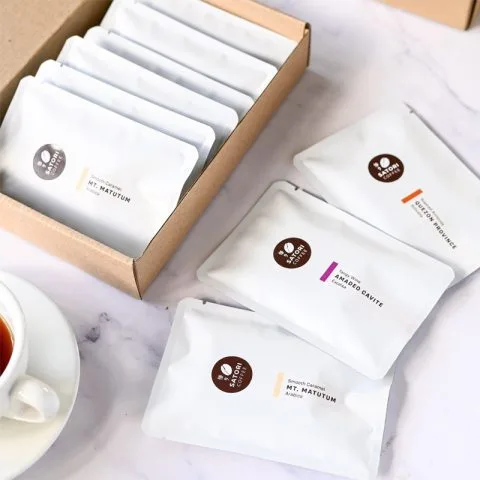 Custom Printed Foil 3 Side Sealed Bag for Sachets No. 2
 -
 Custom Printed Foil Mylar Bag for Odour and Moisture Sensitive Dry Goods No. 4
 -
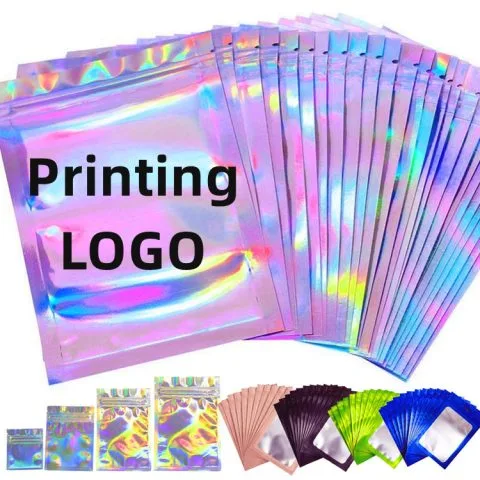 Custom Printed Foil Mylar Bag with Zipper – Smell-Proof (1 g)
 -
 Custom Printed Foil Mylar Bag with Zipper – Smell-Proof (5 g)
 -
 Custom Printed Matt Mylar Bag with Zipper – Smell-Proof (1 g)
 -
Custom Printed Mylar Bag with Zipper – Smell-Proof
-
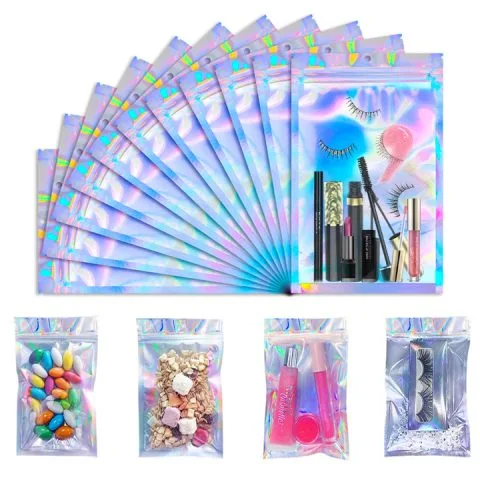 Custom Printed Mylar Bag with Zipper – Smell-Proof (4 g)
 -
 Custom Printed Mylar Bag with Zipper – Smell-Proof (5 g) No. 3
 -
 Custom Printed Mylar Bag with Zipper No. 3
 -
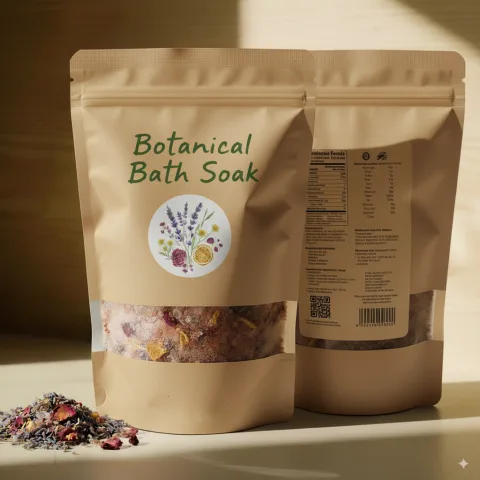 Custom Printed Recycled Foil Stand Up Pouch with Zipper
 -
 Custom Printed Stand Up Pouch with Zipper No. 11
 -
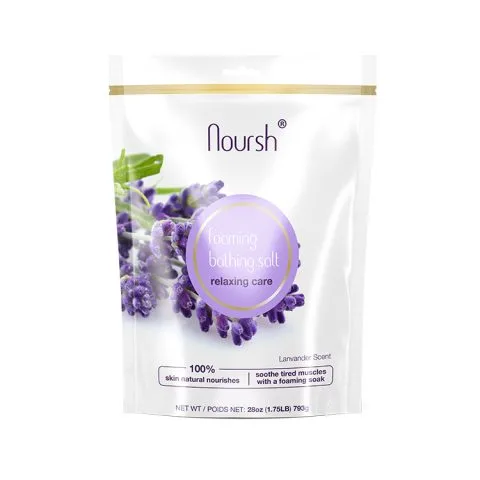 Custom Printed Stand Up Pouch with Zipper No. 12
Narrow it down
Where Cosmetic and Personal Care Packaging Sits in the Range
The numbers are how many packs in this range are also in that one, counted from the catalogue rather than chosen by hand.
The Shapes This Range Is Made In
The Materials It Runs In
About cosmetic and personal care packaging
The Refill That Made the Bottle Worth Keeping
Personal care is where flexible packaging has taken most ground from rigid, and the reason is the refill. A customer keeps the pump bottle and buys a pouch that holds the same volume in a fraction of the material. For the brand that is a lower cost per unit, a smaller carbon figure it can actually evidence, and a repeat purchase built into the format.
What the Contents Demand
- Chemical compatibility. Surfactants, essential oils and alcohol attack sealants that are perfectly fine with food. The inner layer is chosen against the formulation, not against the category.
- A spout that pours cleanly. A viscous conditioner through a narrow fitment ends up on the counter. Wide-bore spouts exist for exactly this.
- Light. Actives and natural oils degrade in daylight. A foil or metallised structure is the difference between a claim that holds and one that does not.
- Regulatory text. Ingredient lists are long and the type is legally sized. That space has to be designed in, not squeezed in afterwards.
Sachets and Masks
The other half of this category is single-use: sheet masks, sample sachets, hotel amenities. Those are three side seal pouches, usually foil, and the tear notch is the whole user experience — a mask sachet that will not open cleanly with wet hands is a bad product regardless of what is inside it.
What We Need to Quote
The formulation type, the viscosity, the fill volume and whether the pack is a refill or a primary. Send a sample of the current pack if there is one; we will identify the structure and match or improve it rather than guess from a description.
Frequently asked
Specifying Cosmetic and Personal Care Packaging: The Questions That Decide It
Will my formulation attack the pouch?
Surfactants, essential oils and alcohol can, and they are all fine with food. Send the formulation or a sample and we specify the inner layer against it rather than against the category.
Why is my conditioner hard to pour?
The fitment is too narrow for the viscosity. A wide-bore spout exists for exactly this, and it costs very little more than the standard one.
Do refill pouches really save that much?
Against a rigid bottle of the same volume, substantially, on both material and on the pallet space it takes empty. It is one of the few sustainability claims in packaging that is easy to evidence.
Can you make sheet mask sachets?
Yes, as foil three side seal pouches. The tear notch matters more here than anywhere: it has to open cleanly with wet hands.
How do I fit the ingredient list on a small pack?
By designing for it. Legal type sizes are not negotiable, so the panel is planned at the dieline stage rather than squeezed in when the artwork is nearly finished.
Are child-resistant closures available?
Yes, and they are worth specifying for anything that could be mistaken for a drink. It is different cap tooling, not a coating on the standard one.
Can the pack be used for a product with actives?
With a light-blocking structure, yes. Vitamin C, retinol and natural oils all degrade in daylight, so a foil or metallised laminate is doing real work rather than looking premium.
Do you make sample sachets to match a full-size pack?
Yes, from the same artwork family, and it is the usual way brands seed a launch. The minimum is per artwork, so the sample and the full size can be quoted together.
What about airline and hotel amenity sizes?
Flat sachets and small spouted pouches, both routine. Volume rules for cabin baggage differ by carrier, so tell us the target market before we size it.
Can I get a pouch that stands on a shelf like a bottle?
A stand up pouch with a base gusset does, when full. It leans as it empties, which is worth knowing if the shelf presentation matters through the whole life of the pack.