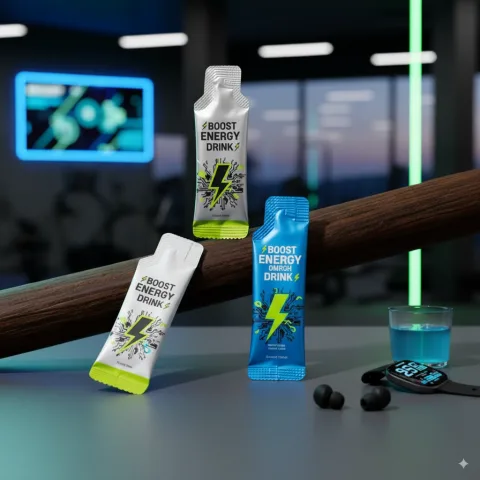
A mono-material PE build keeps the pack inside a kerbside stream instead of a mixed-laminate one, without giving up the seal.
It stands on a base gusset, which is what earns and keeps the facing on a shelf.


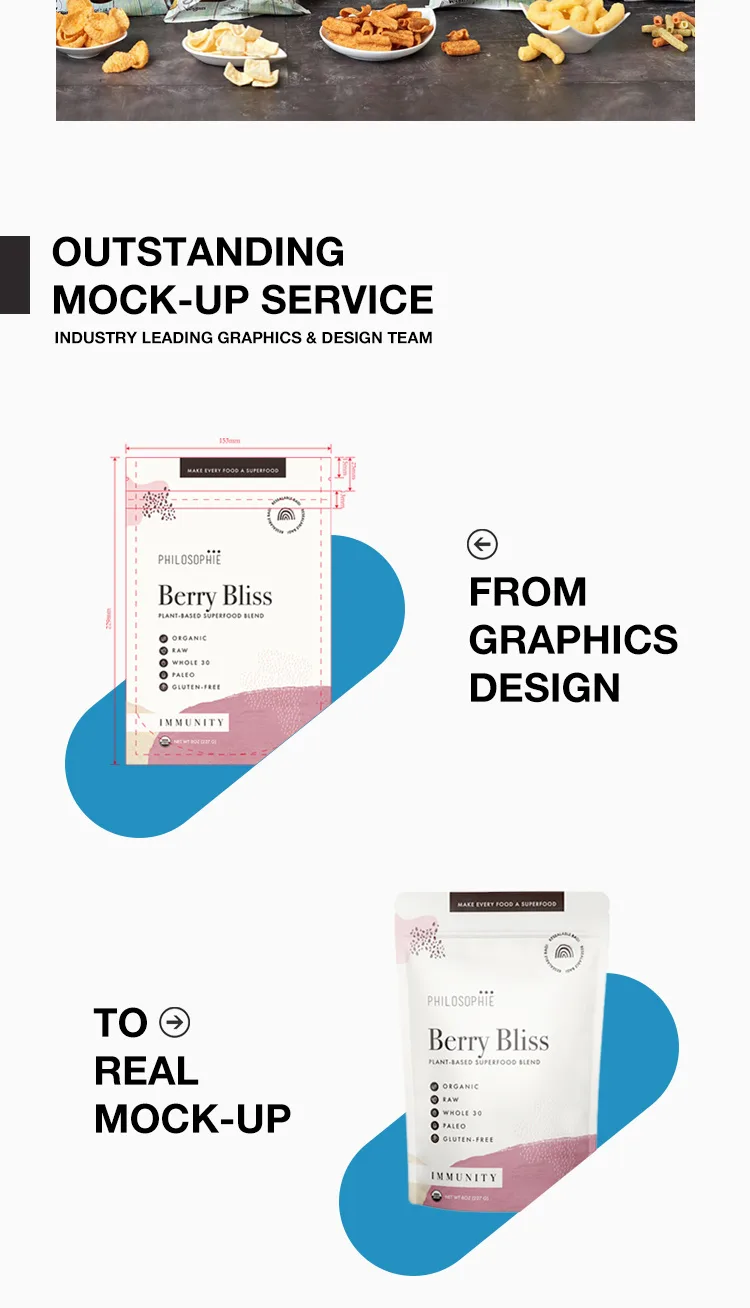

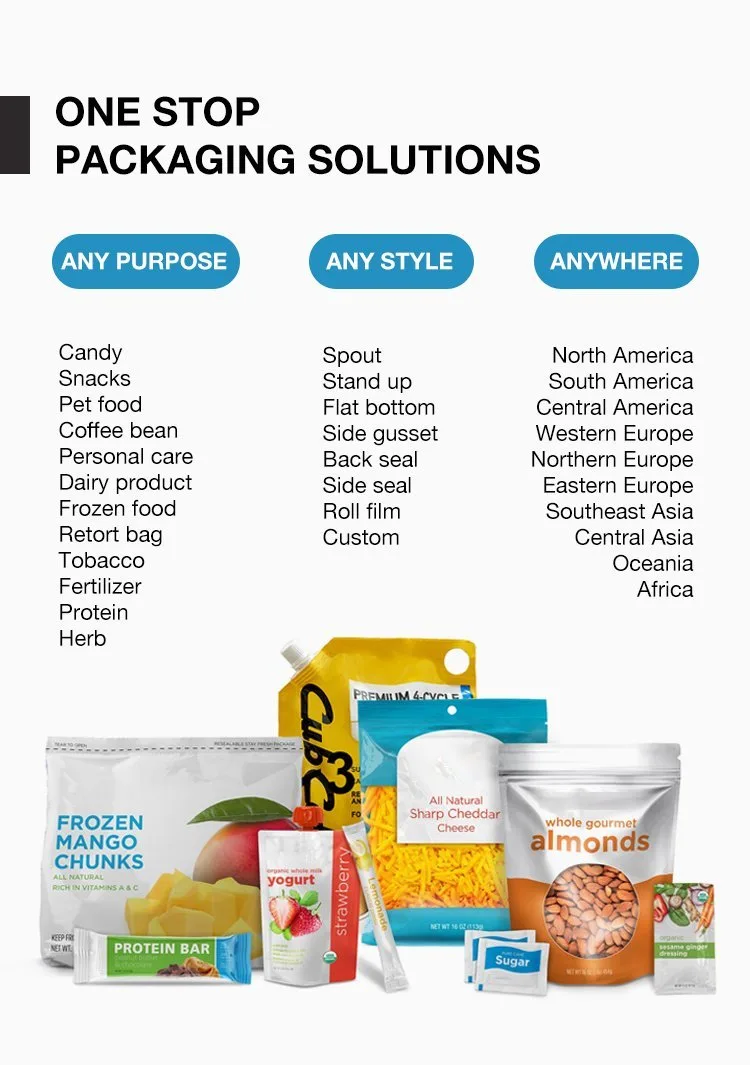
About this pack
What It Is for, and What It Has to Survive
Where This Pack Is Used
This is a snack pack, which means it is squeezed in a basket, carried in a bag and opened somewhere other than a kitchen. Nuts and fried snacks also oxidise in daylight, and crisp textures are lost to a little humidity long before the date runs out.
How It Is Built
The base is a folded gusset that opens under the weight of the fill, so the pack stands and faces forward on a shelf. Gusset depth is set from the fill weight and the bulk density together, because the same weight of an aerated product and a dense powder need different bases.
A PET/PE laminate: polyester outside for the print and the handling, polyethylene inside for the seal. It is the structure most retail packs are built on, and for most retail products it is the correct answer rather than the cheap one.
Specified with post-consumer recycled film in the outer layers and a virgin sealant against the contents, because food-contact rules do not allow recycled material to touch the fill. The percentage is stated in the specification rather than left as a claim.